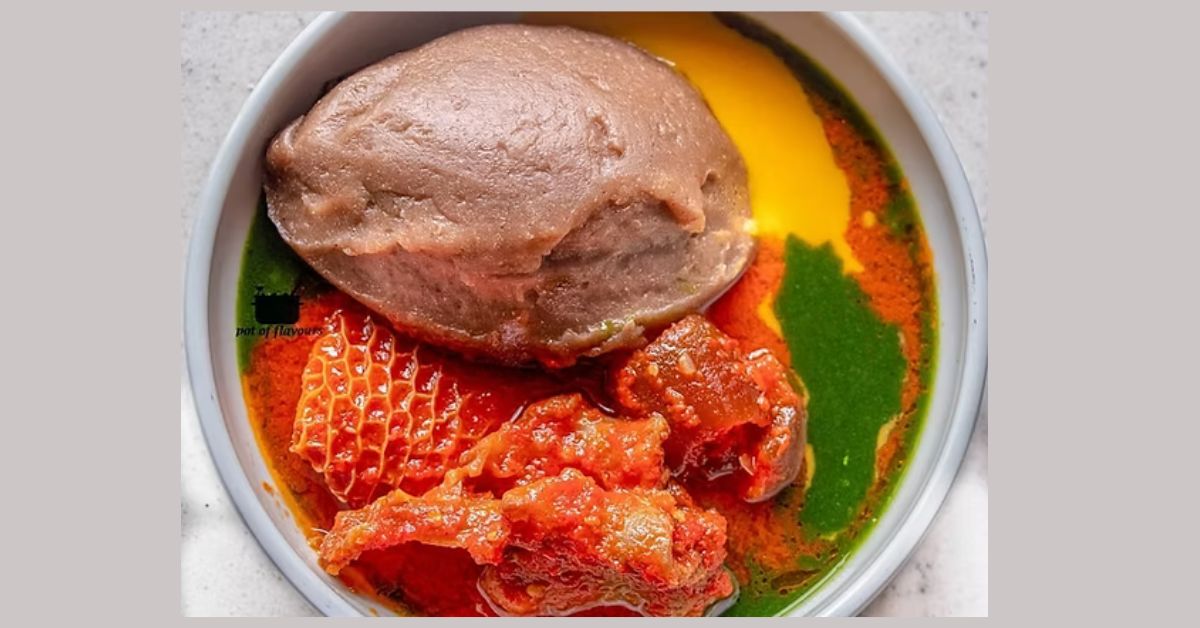
Nigerian food lovers, have you ever tried Amala in Lagos? If there is one Nigerian meal that can turn a casual lunch into a serious food discussion, it is Amala.
Soft, dark, smooth, and unmistakably Yoruba, Amala is more than a staple food in Lagos. It is part of the city’s food culture. Ask ten Lagosians where to find the best Amala in the city and you could easily get ten different answers—followed by passionate arguments about which spot deserves the crown.
Some people want their Amala soft and stretchy. Others prefer it slightly firmer. Some judge a plate by the quality of the ewedu, while others believe the real test is the gbegiri and stew. Then there are those who will tell you that no Amala is complete without plenty of assorted meat.
So, who makes the best Amala in Lagos?
Related post: Lagos Food Guide: 20 Nigerian Foods You Must Try in the City
There is no single answer that everyone will agree on. But Lagos has several restaurants, bukas and local food spots that have earned strong reputations for serving satisfying Amala and traditional soups.
In this guide, we’ll explore some of the most talked-about places to eat Amala in Lagos, what makes each one worth trying, what to order alongside your Amala, and how to choose the right spot for your taste.
What Makes a Great Plate of Amala?
Before naming the best Amala spots in Lagos, let’s settle one important question: what actually makes Amala good?
A great plate isn’t just about the swallow.
Amala is usually made from yam flour, although other variations exist, and its appeal comes from its distinctive texture and earthy flavour.
The best Amala should generally be:
- Soft without being watery
- Smooth without excessive lumps
- Easy to scoop and swallow
- Freshly prepared
- Served hot
- Balanced with rich, flavourful soups
But the swallow is only half the experience.
See also, Lagos Traffic: How to Survive the Bustling of the City
The Soup Matters
Traditional Amala is often served with combinations such as ewedu, gbegiri and obe ata, commonly known together as Amala and gbegiri or Abula when the three are combined.
Ewedu provides a light, slippery texture.
Gbegiri, made from beans, adds a creamy element.
The peppery stew brings heat, depth and richness.
When these three components are properly prepared, they complement the Amala beautifully.
The Meat Can Make or Break the Meal
Let’s be honest: for many people, the meat is not a side detail.
It is part of the reason they ordered Amala in the first place.
Assorted meat, beef, goat meat, shaki, ponmo and other proteins can transform an ordinary plate into a memorable one.
The best spots don’t simply give you a pile of meat. The meat should be properly seasoned, tender and cooked with enough flavour to stand up to the soups.
15 Places to Eat Some of the Best Amala in Lagos
Lagos has no shortage of places to get Amala, from legendary local restaurants to busy bukas and modern Nigerian restaurants.
Here are 15 places worth considering.
1. Amala Shitta
If you’re researching the best Amala in Lagos, Amala Shitta is one of the names that frequently enters the conversation.
Located around Surulere, the restaurant is associated with traditional Nigerian food and is particularly known for Amala.
The attraction is straightforward: generous portions, traditional soups and plenty of protein choices.
What to order
Try the Amala with:
- Ewedu
- Gbegiri
- Stew
- Assorted meat
- Ponmo
If you’re new to Amala, ordering the full combination gives you a good introduction to the dish.
2. Amala Phase 1
Amala Phase 1 is another popular name among Lagos food lovers.
The restaurant focuses on traditional Nigerian meals, making it a useful stop if you’re craving Amala alongside other local dishes.
Its appeal is less about fine dining and more about getting a hearty Nigerian meal in a familiar setting.
Why try it?
It’s a good option when you want traditional Amala without unnecessary fuss.
3. Iya Oloja Amala
Local Amala spots often have something that polished restaurants struggle to reproduce: atmosphere.
Iya Oloja Amala is the kind of place that appeals to diners looking for a more traditional food experience.
The focus is on the food rather than presentation.
Expect the kind of straightforward Nigerian meal that makes you understand why Amala remains such a beloved Lagos staple.
4. Amala Yahoo
Don’t let the unusual name distract you.
Amala Yahoo is one of the Lagos food spots associated with the city’s thriving Amala culture.
Places like this appeal to diners who want generous local meals without the formal atmosphere of an upscale restaurant.
If you’re exploring Lagos food culture, these casual Amala joints are worth experiencing.
5. White House
White House
White House is one of the better-known names in Lagos’ local food scene.
The restaurant is particularly associated with traditional Nigerian dishes and has attracted diners looking for hearty local meals.
Its location around Yaba also makes it convenient for people exploring the mainland.
What makes it interesting?
The experience is about classic Lagos food culture.
Don’t expect an elaborate fine-dining presentation.
Come hungry, order your meal and enjoy it the way Nigerians have enjoyed local food for generations.
6. Bukka Hut
Bukka Hut
Bukka Hut offers a more structured restaurant experience while still focusing heavily on Nigerian food.
If you’re not comfortable with the rough-and-ready atmosphere of some traditional bukas, this can be an easier introduction to local dishes.
You can enjoy Amala alongside other Nigerian favourites and choose from different protein options.
Best for
- First-time visitors
- Casual meals
- Groups
- Diners who prefer a more organised restaurant setting
7. Yakoyo
Yakoyo
Yakoyo is another Nigerian restaurant worth considering when you’re searching for traditional food in Lagos.
The appeal is its focus on familiar local flavours.
For visitors who want to explore Nigerian cuisine beyond jollof rice and fried rice, a meal of Amala, ewedu, gbegiri and stew is a much better introduction to Yoruba food culture.
8. Calabar Kitchen
Calabar Kitchen
Although Calabar cuisine has its own identity, Lagos’ food scene is wonderfully mixed.
A place like Calabar Kitchen can be useful if you’re travelling with friends who want different Nigerian dishes.
That said, if your mission is specifically to find the most traditional Yoruba-style Amala, prioritise restaurants that specialise heavily in Yoruba food.
9. Àbèní Restaurant
Àbèní Restaurant is another option for diners interested in traditional Nigerian meals.
The restaurant fits into Lagos’ wider collection of local-food destinations where diners can find familiar Nigerian dishes without needing to visit a roadside food stall.
The experience is particularly appealing if you’re looking for a sit-down meal.
Read also, Best Restaurants in Lagos: 20 Places Every Food Lover Should Try
10. Ewa Agoyin and Amala Spots Around Lagos Island
Sometimes the best food discoveries aren’t necessarily the restaurants with the biggest online presence.
Lagos Island has numerous local food businesses serving traditional Nigerian meals.
Small eateries around busy commercial areas can offer surprisingly good Amala, especially during lunch.
The key is to look for places with a strong local customer base.
If workers and regulars keep returning during lunchtime, that’s usually worth paying attention to.
11. Amala Joint in Ikeja
Ikeja has a large population of workers, residents and visitors, so it’s no surprise that the area has numerous local-food spots.
If you’re staying in Ikeja and don’t want to travel across Lagos just for Amala, look for a busy neighbourhood restaurant specialising in Yoruba meals.
The advantage is convenience.
You can get your Amala fix without spending hours in Lagos traffic.
12. Amala Spots in Surulere
Surulere has a strong food culture, and Amala is well represented.
The area has numerous casual restaurants and local food joints where you can find Amala with traditional soups and assorted meat.
For residents and visitors staying on the mainland, Surulere can be a good place to explore when you’re searching for authentic local food.
13. Amala Spots in Yaba
Yaba is another area worth exploring.
With its large student population, businesses and busy commercial environment, there is strong demand for affordable Nigerian meals.
You’ll find local eateries serving Amala alongside rice dishes, beans, ewedu, gbegiri and other staples.
The best strategy is simple: follow the crowd, inspect the food and choose a busy spot with good turnover.
14. Amala Spots in Agege
Agege is another part of Lagos where traditional Nigerian food is deeply embedded in everyday life.
If you’re specifically looking for a less polished, more local food experience, neighbourhood Amala joints in areas such as Agege can be worth exploring.
These places may not have glamorous interiors or extensive online reviews.
But sometimes, that’s exactly the point.
You’re there for the food.
15. Amala at Lagos’ Traditional Food Restaurants
Beyond specialist Amala joints, many Nigerian restaurants across Lagos serve Amala as part of a broader menu.
This can be a good choice when you’re eating with people who don’t want the same meal.
One person can order Amala.
Another can choose pounded yam.
Someone else can order rice or another Nigerian dish.
For groups, this flexibility can be useful.
What Should You Eat With Amala?
Ordering Amala by itself isn’t the full experience.
If you want to understand why Lagosians love the dish, try it with traditional soup combinations.
Amala + Ewedu + Gbegiri + Stew
This is the classic choice.
The ewedu gives you the smooth, slippery texture.
The gbegiri adds richness.
The stew brings heat.
Together, they create the combination commonly known as Abula.
If you’ve never eaten Amala before, this is where I’d recommend starting.
Amala + Ewedu + Stew
If beans aren’t your thing, you can skip the gbegiri.
The combination is still delicious when the ewedu and stew are well prepared.
Add Plenty of Protein
Choose according to your preference.
Popular choices include:
- Beef
- Goat meat
- Shaki
- Ponmo
- Assorted meat
- Fish
If you’re particularly hungry, ask what protein options are available before ordering.
How Much Does Amala Cost in Lagos?
The price of Amala varies widely depending on the restaurant, location, portion size and protein you choose.
A basic plate from a neighbourhood food spot can be relatively affordable.
A meal at a more established restaurant will usually cost more.
Premium proteins can also increase the final bill considerably.
Instead of focusing on one citywide price, think in terms of three categories:
Budget Amala
Usually found at local bukas and neighbourhood eateries.
Good for everyday meals.
Mid-Range Amala
Typically available at established Nigerian restaurants.
You get a more comfortable environment and broader menu.
Premium Amala
Found at upscale restaurants where presentation, ambience and service are part of the experience.
The important thing is to choose according to what you value.
If your priority is authentic local flavour, you don’t necessarily need the most expensive restaurant.
How to Find the Best Amala in Lagos
Want to discover your own favourite?
Use these simple rules.
Look for High Customer Turnover
A busy food spot isn’t automatically excellent, but high turnover usually means the food is being prepared and served regularly.
That matters for Amala.
Freshly prepared food is generally preferable to something that has been sitting around for hours.
Ask Locals
This is one of the best ways to discover hidden food spots.
Ask a Lagos resident:
“Where do you eat Amala around here?”
You may get a better recommendation than a generic internet search.
Pay Attention to the Soups
Don’t judge the restaurant by the Amala alone.
Taste the ewedu.
Try the gbegiri.
Check the stew.
The quality of the entire combination matters.
Don’t Ignore the Meat
Look at the available proteins before ordering.
Good meat should be properly cooked and flavourful.
Is Amala Healthy?
Amala can be part of a balanced diet, but like any substantial meal, portion size and what you eat with it matter.
The yam flour provides carbohydrates, while soups and protein contribute other nutrients.
Adding vegetables and choosing reasonable portions can make the meal more balanced.
The biggest difference often comes from the soup and protein choices.
A meal loaded with fatty meat and large portions will be very different nutritionally from a moderate portion served with vegetables and leaner protein.
Why Amala Is So Important to Lagos Food Culture
Amala isn’t simply something people eat when they’re hungry.
It represents a connection to Yoruba food culture and Nigerian culinary tradition.
In Lagos, that tradition has evolved alongside the city itself.
You can find Amala in neighbourhood bukas, family restaurants, modern Nigerian restaurants and busy lunchtime eateries.
That range is part of what makes Lagos food culture fascinating.
You don’t need to visit an expensive restaurant to have an unforgettable meal.
Sometimes the most memorable plate comes from a small local restaurant where the food arrives quickly, the soup is rich and everyone at the next table is eating the same thing.
Best Areas in Lagos to Search for Amala
If you’re exploring the city specifically for Amala, these areas are worth considering:
Mainland Lagos
Surulere, Yaba, Ikeja and Agege have numerous local-food options.
Lagos Island
You’ll find traditional Nigerian food around busy commercial areas, especially where there is strong lunchtime demand.
Lekki and Victoria Island
These areas offer more modern restaurants and upscale dining options, including Nigerian restaurants that serve traditional dishes in a contemporary setting.
The best choice depends on the experience you want.
If you want traditional and affordable, look toward busy neighbourhood eateries.
If you want comfort and ambience, choose an established restaurant.
If you want a more polished Nigerian dining experience, explore restaurants in Lekki or Victoria Island.
Amala for First-Time Visitors to Lagos
If you’re visiting Lagos from outside Nigeria, don’t be intimidated by Amala.
It may look unfamiliar at first, especially if you’re used to Western-style meals.
Ask for guidance if you don’t know how to eat it.
Traditionally, a small portion of the Amala is taken with the fingers, shaped and used to scoop up the soup and accompanying ingredients.
Many restaurants also provide cutlery if you prefer.
The important thing is to enjoy the experience.
And if you’re unsure what to order, simply say:
“Amala with ewedu, gbegiri and stew, with assorted meat.”
That’s a great place to start.
Frequently Asked Questions (FAQs)
Who makes the best Amala in Lagos?
There is no universally agreed winner because taste is subjective. Popular Amala restaurants and local food spots include Amala Shitta, Amala Phase 1 and several traditional bukas across Ikeja, Surulere, Yaba, Lagos Island and other parts of the city.
What is the best soup to eat with Amala?
The classic combination is ewedu, gbegiri and peppery stew. Together, the combination is commonly called Abula.
What is Amala made from?
The most common type of Amala is made from yam flour. It has a distinctive dark colour and soft, smooth texture.
Is Amala the same as fufu?
No. They are different Nigerian swallows made from different ingredients and with different textures and flavours.
What meat goes best with Amala?
Assorted meat is one of the most popular choices. Beef, goat meat, shaki, ponmo and fish are also common options.
Where can I find affordable Amala in Lagos?
Neighbourhood bukas and local food restaurants generally offer more affordable Amala than upscale restaurants. Areas such as Yaba, Surulere, Ikeja and Agege have many local-food options.
Is Amala spicy?
The Amala itself isn’t necessarily spicy. The heat usually comes from the stew or pepper sauce served alongside it.
Can tourists eat Amala in Lagos?
Absolutely. Amala is one of the Nigerian dishes worth trying if you’re exploring Lagos’ food culture. Start with the traditional combination of Amala, ewedu, gbegiri and stew.
What is Abula?
Abula is a popular combination of Amala served with ewedu, gbegiri and stew. It is one of the classic ways to enjoy Amala.
Should Amala be eaten hot?
Freshly prepared Amala is generally best enjoyed warm or hot, particularly when served with hot soups and stew.
Conclusion
So, who makes the best Amala in Lagos?
The honest answer is that there isn’t one restaurant that can claim the crown for everyone.
The best Amala depends on what you’re looking for.
Want a traditional local experience? Try a busy Amala joint or buka.
Want a well-known restaurant? Explore established Nigerian food spots.
Want comfort and ambience? Choose a modern Nigerian restaurant.
But wherever you go, judge the meal by the same standards:
Is the Amala fresh and smooth? Is the ewedu properly prepared? Does the gbegiri have depth? Is the stew rich and flavourful? Is the meat tender and well seasoned?
Get those things right, and you have a plate worth talking about.
And that’s what makes searching for the best Amala in Lagos so much fun.
There may never be a single winner.
Instead, Lagos gives you hundreds of opportunities to discover your own.